a passing of whispers
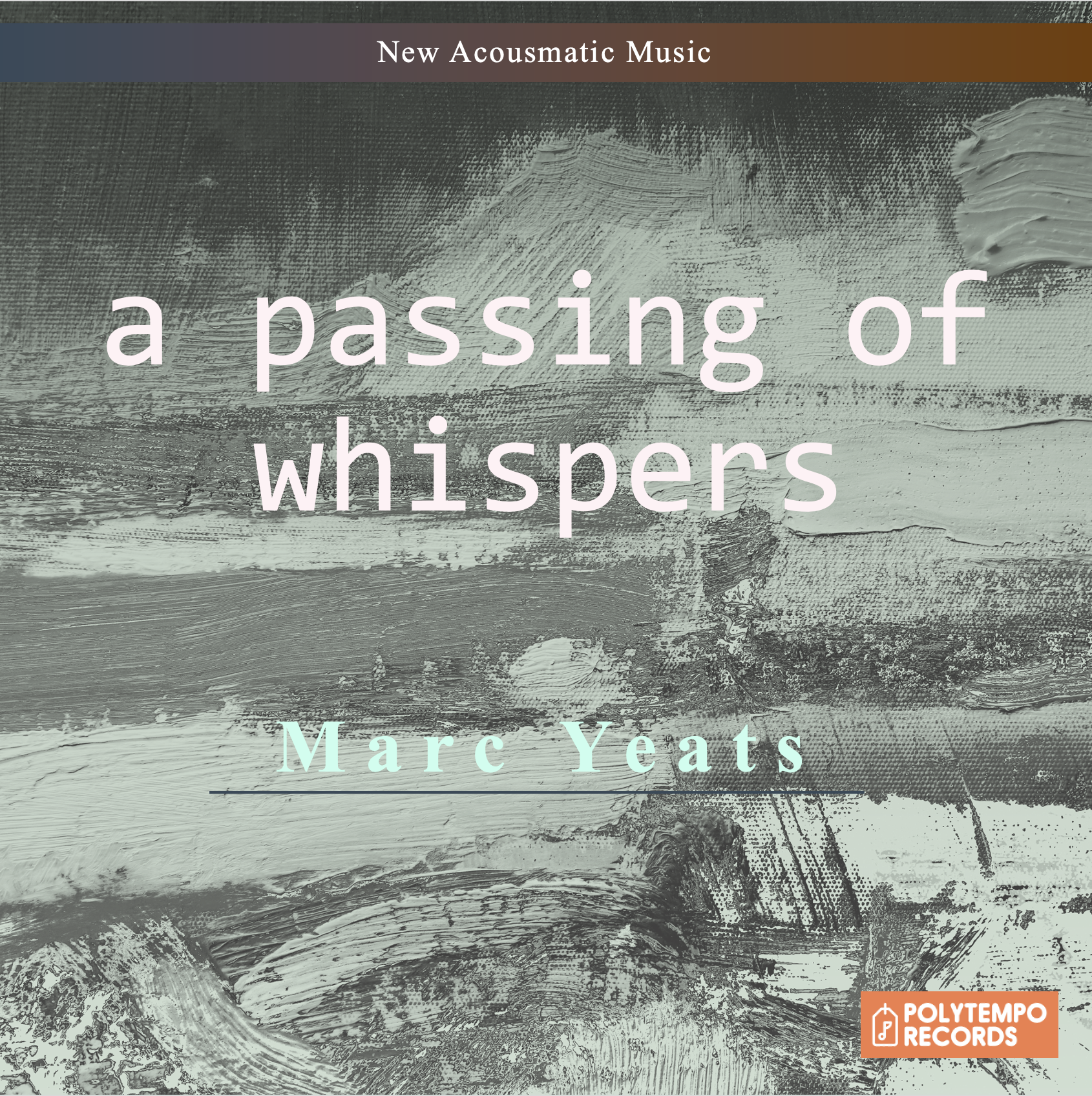
a passing of whispers (June 2026)
An Acousmatic Work for Oboe and Large Ensemble
Duration 23:15
For Sadie Harrison
a passing of whispers is the second of two compositions generated using material self-borrowed and transformed from Flow Country, a huge, predominantly quiet, detailed and intimate fifty-two-minute acousmatic polytemporal adagio. The broad structure of Flow Country is anchored by a self-borrowed and greatly slowed-down live recording of my twelve-minute solo violin piece cutouts. This material, with the new landscapes it reveals, forms the skeleton onto which other related content is generated and layered. In creating two further pieces, I divided materials from Flow Country along with its skeleton at around the twenty-nine minute duration point. The second part of this division, approximately twenty-two minutes long, is the foundation upon which a passing of whispers is built. Further materials drawn from additional extant compositions are incorporated, most strikingly, the fractured lines that comprise the solo oboe part, featured throughout the piece that together forge fresh musical identities.
Traditional musical development and overt dramatic climaxes are set aside in favour of a more fluid approach that emphasises flow, undulation, and gradual transformation. Brief dance-like rhythms may coalesce momentarily from the texture, presenting regular beat patterns before dissolving back into the rich, pulse-ambiguous polytemporal layers that proliferate throughout the work. Increases in density and volume arise organically, becoming significant sonic landmarks.
Acousmatic Music
My practice of acousmatic composition (a form of electronic music recorded on digital or tape media and played back entirely through loudspeakers, intentionally hiding the original sound sources, live instruments, or physical performers from the audience to ensure a pure listening experience)—is a concept inspired by Pythagoras’s ancient practice of lecturing behind a curtain. It sits alongside and compliments my compositions for live performance. This acousmatic approach allows me to realise any scale of music sonically, creating rich, polyphonic, polytemporal, and timbrally expansive listening landscapes that exist fully formed for the listener through audio playback. Using high-quality samples, live recordings, and self-styled morphing synthetic sounds—processed, layered, and shaped as needed—I can compose music in its most direct sonic form. There is no notated score as intermediary and no live performers at concert venues—only the limitations of my imagination and the media I employ to express my thought as sound.
Flow: A Compositional Approach
The constantly unfolding.
A journey to nowhere in particular, yet rich with implication. Everything exists in a perpetual state of development—a restless flux where materials are never fixed but always becoming. Directionality emerges organically through gesture, shifts in density, and the continual repurposing and recontextualisation of a tightly restricted palette of ideas. These ideas weave themselves into an intricate, morphing, living network of associations, where echoes, transformations, and subtle, bold or violent correspondences bind them together.
Climactic moments, when they appear, arise not from structural inevitability but through the natural overlapping and interference of coexisting ideas. This is a poetic dialectic of competing currents—sometimes unified, sometimes in productive friction—that share the same temporal space and, through that shared presence, come to belong together. Context is everything; meaning is relational, emergent, and contingent. This is non-teleological music.
Beneath the apparent freedom lies a hidden architecture. The ‘skeleton’ of each work is derived from another of my musical entities, often subjected to extreme time-stretching that uncovers new inner landscapes within the familiar. From this frame, transformation and self-borrowing proliferate—adding new material layers as flesh, texture, and vitality. The organisation of events within, around, and against this skeleton ultimately determines the narrative content. Compositional intent is continually enriched and decentred by the structural potentials of newly generated materials as they unfold across time and multiple simultaneous layers. Much is left to happenstance and a ‘try it and see’ attitude—happy accidents are preserved, less appealing outcomes modified or abandoned. A balance between risk, chance, spontaneity, and calculation shapes the final form.
The pieces are often long, allowed to breathe until a point of intuitive satisfaction is reached. Closure is guided by an inner sense of the music’s condition rather than any external formal scheme. Once shaped and decided, the living, mutable energy of the compositional journey crystallises and is fixed into a permanent sonic object.
These reflections are personal and associative rather than prescriptive. Listeners are invited to move through and explore this acousmatic sound world, forming their own connections and discovering individual meaningfulness within the sonic landscape. Through flow, each piece becomes a cogent, frozen reflection of its origins and journey while enacting a deliberate tension between memory and mutation, between what was and what has become. This audible friction between idea and sonic fact is the music itself.